

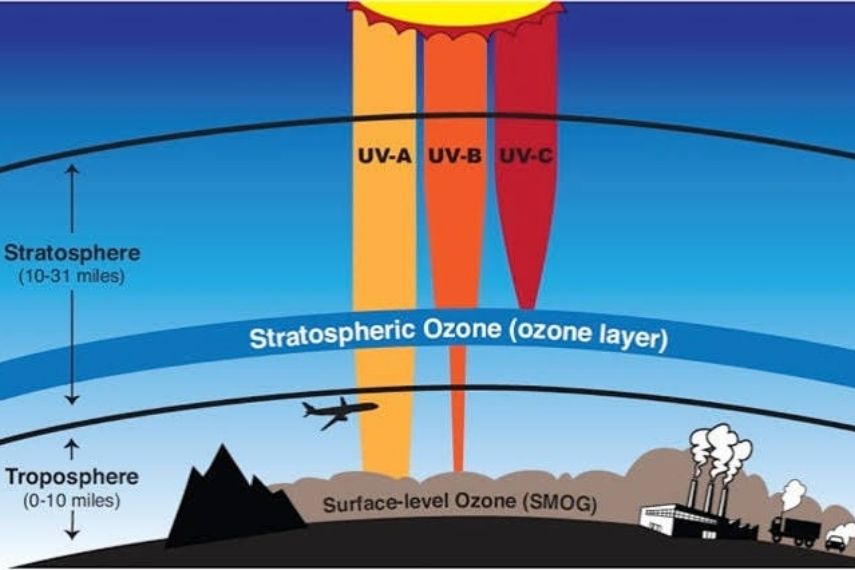
The Ozone Layer is a thin layer of ozone gas located in the stratosphere, about 15–35 km above the Earth’s surface. It plays a vital role in protecting life by absorbing most of the Sun’s harmful ultraviolet (UV) radiation, especially UV-B rays. Without this layer, humans could face increased risks of skin cancer and eye damage, and plants, animals, and marine ecosystems would also be severely affected. However, the ozone layer has been damaged over time due to human-made chemicals, leading to Ozone Depletion.
Over time, the ozone layer has been damaged due to human activities, particularly the release of chemicals like chlorofluorocarbons (CFCs) from refrigerators, and air conditioners. These substances break down ozone molecules in the atmosphere, leading to Ozone Depletion. This thinning of the ozone layer allows more harmful UV radiation to reach the Earth’s surface, increasing environmental and health risks.
To protect the ozone layer, we should reduce the use of ozone-depleting substances and switch to eco-friendly alternatives. Proper maintenance and disposal of cooling equipment, along with reducing pollution, are also important. International efforts like the Montreal Protocol have played a key role in controlling harmful chemicals. By raising awareness and making responsible choices, we can help restore and preserve the ozone layer for future generations.[/vc_column_text][/vc_column][/vc_row]