

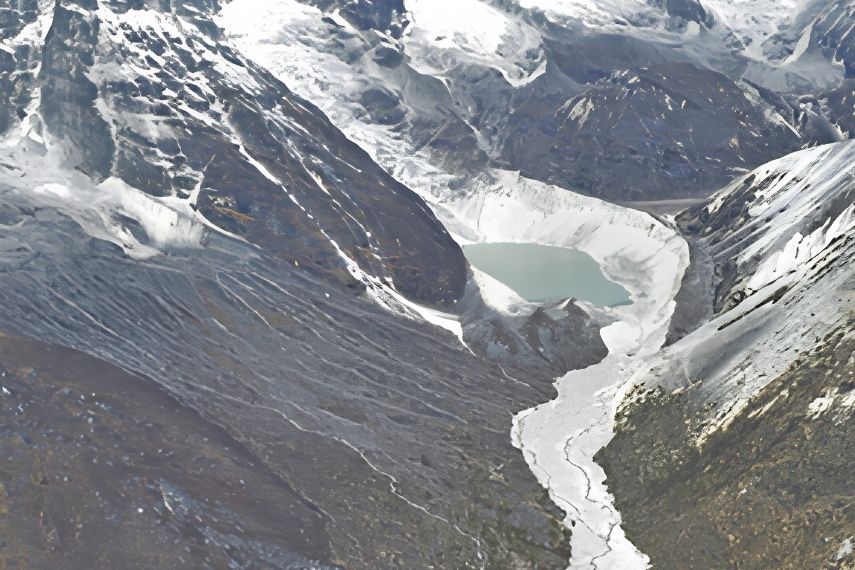
A glacier lake, also known as a glacial lake, is a body of water formed by the melting of glaciers. These lakes are commonly found in high mountain regions and polar areas where glaciers are present. When ice from a glacier melts, the water collects in natural depressions or behind barriers made of rock and ice, forming a lake.
Glacier lakes are important sources of freshwater and play a key role in supporting local ecosystems, including plants and animals. They also contribute to river systems, especially in mountainous countries. However, these lakes are often very cold and can be quite deep, making them unique natural features.
Despite their importance, glacier lakes can be dangerous. If the natural dam holding the water suddenly breaks, it can cause a Glacial Lake Outburst Flood (GLOF), leading to severe flooding and damage to areas downstream. With rising global temperatures, glaciers are melting faster, increasing the risk associated with these lakes.
In Nepal, glacier lakes are formed in the Himalayan region when glaciers melt and water collects in natural basins or behind ice and rock barriers. Examples include Imja Tsho and Tsho Rolpa. These lakes are important sources of freshwater and support rivers and local communities, but they can also be dangerous because if their natural dams break, they can cause a Glacial Lake Outburst Flood (GLOF), leading to severe flooding downstream, especially as climate change accelerates glacier melting.[/vc_column_text][/vc_column][/vc_row]